

CRIMINAL LAW
Take a deep dive into Indonesia's
All information is based from December 16, 2025

Criminal law, or Hukum Pidana in Indonesia..


encompasses the rules determining prohibited actions considered crimes and the penalties imposed on those who violate the Criminal Code (Kitab Undang-Undang Hukum Pidana or KUHP). The KUHP underlines the rules to maintain social order, protect individual rights, prevent crimes, and provide a means of punishing those who violate the law.

The current Indonesian Criminal Code (KUHP) is rooted in the Dutch colonial-era Wetboek van Strafrecht (WvS) of 1918.
Following Indonesia's independence, this code served as the foundation for the nation's criminal law.
Over the years, ongoing efforts have aimed to reform and modernize the legal framework.
Latest modernization: Law No. 1 of 2023, which introduces a new National Criminal Code that replaces the colonial legacy.
Purpose of the new code: Better align with Indonesia’s national values and contemporary societal needs.
Legality Principle: No one can be punished unless their act is clearly criminalized by law beforehand
Territorial Principle: Criminal law is based on state sovereignty, where they are obliged to guarantee legal order and have the right to impose penalties on anyone who commits a crime within its territory.
Article 4 of Law 1/2023: Criminal provisions in the law apply to anyone who commits:
Criminal acts in Indonesia
Criminal acts on Indonesian ships or aircraft
Criminal acts in the field of information technology that occur in Indonesia
Nationality Principle: Indonesian citizens can be prosecuted for certain crimes committed abroad.
Accountability Principle: A person can only be punished if the crime was done intentionally or negligently and they were capable of taking responsibility.
Protection Principle/Passive National: Indonesia can prosecute foreign nationals who commit crimes abroad, if the victim is an Indonesian citizen or if the crime harms Indonesian national interests.
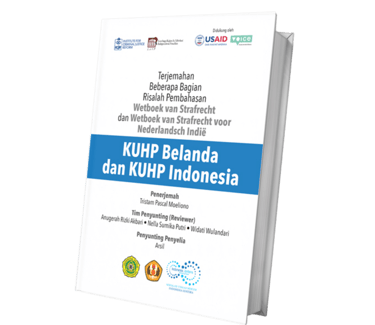




background/historical overview
key principles


Indonesia implements the Juvenile Criminal Justice System which is Undang-Undang Sistem Peradilan Pidana Anak (UU SPPA), specifically Law No. 11 of 2012 that is relevant to Indonesian youth as it governs the specific punishments for crimes conducted by those under 18 year olds.
UU SPPA is a comprehensive law that is the juvenile court law of Indonesia that establishes a separate legal system for children who are in conflict with the law.
relevance to the youth
Age of Criminal Responsibility
The minimum age for criminal responsibility is 12-14 years old, where those under 14 can only have actions imposed, such as a warning, however for those aged 14-18 years old can be affected in punishments, rehabilitation, and imprisonment may happen.
Punishments for Children (14-18)
Warning (Pidana Peringatan)
Conditional Sentence (Pidana dengan syarat)
Community service, outside-institution supervision, etc
Work training
In-institution guidance
Imprisonment (applied at the last resort, and maximum of half the adult term)
Diversion is mandatory, where the maximum threat of imprisonment has to be less than 7 years
Children must be separated from adults during the process, including detention and conviction.
Children have the rights to legal aid, non-violent treatment, recreation, and are protected from the death penalty or life imprisonment.
Focuses on rehabilitation and protection of the child’s welfare, where imprisonment is the last resort.
Special Rules
What is
uu sppa?
all about uu sppa: Indonesia's juvenile criminal justice system


Youth-Related Criminal Law Cases in Indonesia
This section presents a list of criminal law case examples involving youth in Indonesia to illustrate how legal provisions are applied in practice.


A 15 year old teenager stealing a motorcycle (2025)
A teenage student was arrested by Lamongan police after being caught trying to steal a motorcycle in Kedungasri, Kembangbahu District on January 1 2025. Under UU SPPA, he is processed through the juvenile justice system, which may apply diversion or rehabilitation rather than adult penalties.


14 Year Old Girl Kills Friend Over Online Game Dispute (Makassar, 2024).
A 14-year-old girl fatally stabbed her friend after a fight related to an online game. This incident happened inside a minimarket in Makassar. Because she is under 15, she cannot receive imprisonment under UU SPPA. Instead, the court imposed institutional guidance and rehabilitation measures, not adult level punishment.


Teen Street Fight in Jakarta (2023)
A group of teenagers were involved in a late-night fight in Kebayoran Lama which resulted in one victim being fatally stabbed. Multiple teens from ages 14-17 were arrested. Although murder normally carries heavy penalties, minors receive reduced sentences (maximum half the adult term) and mandatory diversion reviews under UU SPPA.
Further Readings
Kitab Undang-Undang Hukum Pidana:
Undang Undang Sistem Peradilan Pidana Anak (UU SPPA) UU No. 11 Tahun 2012
Mahkamah Agung RI - Pusat Pengadilan
Hukumonline – Explanation of KUHP, juvenile justice, and criminal law basics
Works Cited
Detik Jatim. “Remaja Usia 15 Tahun Nekat Curi Motor, Diamankan Warga Lamongan.” Detik, n.d., www.detik.com/jatim/hukum-dan-kriminal/d-7713621/remaja-usia-15-tahun-nekat-curi-motor-diamankan-warga-lamongan. Accessed 29 Dec. 2025.
Detik News. “Tawuran di Kebayoran Lama Berujung Tewas, 3 Remaja Jadi Tersangka.” Detik, n.d., news.detik.com/berita/d-6943591/tawuran-di-kebayoran-lama-berujung-tewas-3-remaja-jadi-tersangka. Accessed 29 Dec. 2025.
Hukumonline. “Asas-Asas Hukum Pidana.” Hukumonline, n.d., www.hukumonline.com/berita/a/asas-asas-hukum-pidana-lt62cb7d58e9538. Accessed 29 Dec. 2025.
Indonesian Journal of Socio-Legal Studies. “Criminal Law Development in Indonesia.” IJSL – International Journal of Socio-Legal Studies, n.d., international.appihi.or.id/index.php/IJSL/article/download/330/442/1719. Accessed 29 Dec. 2025.
International Journal of Scientific Research. “Implementation of Criminal Law in Indonesia.” IJSR – International Journal of Scientific Research, n.d., ijsr.internationaljournallabs.com/index.php/ijsr/article/download/1345/898. Accessed 29 Dec. 2025.
Kompas.com. “Kronologi Kasus Anak 14 Tahun Tusuk Teman hingga Tewas di Makassar.” Kompas.com, 23 Feb. 2024, www.kompas.com/tren/read/2024/02/23/170000365/kronologi-kasus-anak-14-tahun-tusuk-teman-hingga-tewas-di-makassar. Accessed 29 Dec. 2025.
Neliti. “History of Criminal Law in Indonesia.” Neliti, n.d., www.neliti.com/publications/465900/history-of-criminal-law-in-indonesia. Accessed 29 Dec. 2025.
West Science Law and Human Rights Journal. “Criminal Justice and Legal Enforcement in Indonesia.” WSLHR – West Science Law and Human Rights, n.d., wsj.westsciences.com/index.php/wslhr/article/view/1307. Accessed 29 Dec. 2025.
Image Credits
Faizah Sururi. “Terjemahan Beberapa Bagian Risalah Pembahasan Wetboek van Strafrecht Dan Wetboek van Strafrecht Voor Nederlandsch Indië - LEIP.” LEIP, 8 Dec. 2021, leip.or.id/terjemahan-beberapa-bagian-risalah-pembahasan-wetboek-van-strafrecht-dan-wetboek-van-strafrecht-voor-nederlandsch-indie/.
Gibbons, Zeynita. “Menlu Belanda: Indonesia Dan Belanda Berbagi Sejarah.” Antara News, ANTARA, 27 Aug. 2015, www.antaranews.com/berita/514788/menlu-belanda-indonesia-dan-belanda-berbagi-sejarah. Accessed 29 Dec. 2025.